

 GP Services
 Allied Health Services
  Mental Health Services
  General Consultation
  eScript & Prescription
  Online Medical Certificates
  Specialist Referral Request
  Pathology Referral Request
  Radiology Referral Request


 Physiotherapy
  Dietetics
  Telepsychiatry & Online ADHD Psychiatrists
  Online Psychologists
  Mental Health Plan
  What We Offer
  Telehealth Services
  Health Conditions


 Certificate Validity
  Corporate Health Services
  Online Doctor Consultation Melbourne
  Online Doctor Consultation in Adelaide
  Online GP Consultation Sydney
  Telehealth Consultation in Perth
  Telehealth GP Appointment for Brisbane Residents
 Key Takeaways
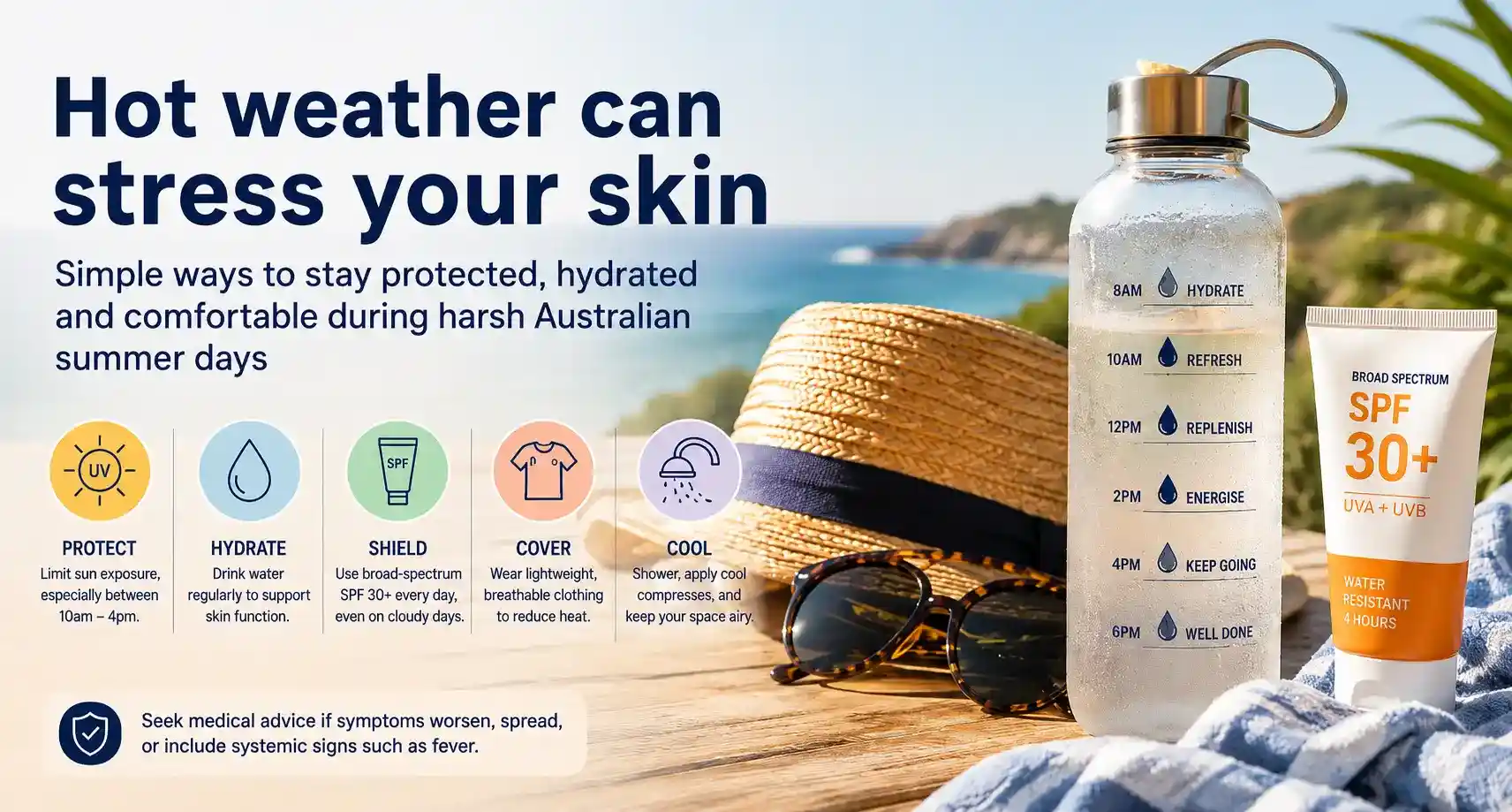
- Australian summers expose skin to high UV, heat, and humidity stress.
- Heat rash commonly develops when sweat ducts become blocked in humid conditions.
- Hydration supports normal skin barrier function during extreme temperatures.
- Limiting peak UV exposure reduces cumulative sun stress.
- Indoor airflow and moderate humidity can support skin comfort.
- Medical review is appropriate if symptoms worsen, spread, or include systemic signs.
Australian summers, characterised by high temperatures and strong UV exposure, can place additional stress on the skin. While the outdoor temperature in Sydney, Melbourne, Brisbane, and surrounding regions often climbs to 35-45°C, intense UV rays with indices over 11 add to the stress on the skin, which is our largest organ by area and serves as the primary barrier between us and the environment. Heat rash and dehydration may cause discomfort and, in some cases, contribute to broader heat-related symptoms. This educational resource presents evidence-based ways to keep the skin in good shape and help it get through the hot summer period by addressing it with appropriate environmental and hydration measures.
How to Beat the Heat and Protect Your Skin
At the core of its role as a thermal regulator, skin and hair care balance heat throughout the body through mechanisms such as sweat secretion and skin vasculature dilation or constriction. However, extreme temperatures and intense solar radiation during the Australian summer can place significant stress on the skin. High humidity can prevent sweat from evaporating, thus cooling the body; at the same time, prolonged exposure to the sun can make your skin more prone to sunburn and premature aging. All these natural mechanisms that human skin has to take care of itself during the summer are pretty normal and often really beneficial, but they need to be supported by good environmental measures.
Heat-induced skin changes
- Cellular inflammatory reactions: Prolonged exposure to high-intensity UV leads to changes in cellular metabolism, which is often evidenced by the appearance of erythema or irritation as the skin tries to cope with the environmental challenge
- The sweat gland function: In hot weather, sweat glands release sweat to cool off the body, but wearing clothes that are not very breathable and have a tight fit to the skin, coupled with the high indoor humidity levels (70-90% prevalent in the East Coast), can hinder sweat permeability through the skin layers
- Miliaria symptoms: Pinpoint-sized eruptions, generally ascribed to heat and sweat accumulation called “prickle heat”, develop whenever sweat pathways become interrupted, particularly in skin folds or areas covered by clothing during hot and humid weather.
All these different reactions occurring simultaneously provide evidence that outdoor factors play a role and interact with one another during the summer season in Australia. Thus, skin discomfort will be one of the effects of these copious interactions of heat, humidity, and UV.
Environmental Stress Factors
Radiation from UV light, heat, and moisture in the air combine to affect how the skin functions at the surface. Australia experiences some of the highest UV levels globally, particularly during the summer months. Seaside areas have to deal with humidity, while those farther from the coast have to go through hot, dry air. Both allow the cells to lose moisture more quickly, so the skin dries out faster and sometimes gets chapped. These variations in weather should dictate which parts of the body we expose more or less to, and thus exemplify how we should respond more to environmental cues rather than just follow symptoms alone.
The Role of Hydration in Skin Health During Summer
Adequate hydration is vital for the skin to withstand blistering heat, whether through summer heatwaves or rapidly changing weather. Therefore, the skin’s barrier function and its ability to adapt to environmental changes depend largely on how well fluid balance is maintained. When fluid intake is insufficient, the skin may appear dull or dry; its firmness will be reduced, and it will become more prone to inflammation and other forms of damage, regardless of the climate.
Maintaining Fluid Balance
- Regular fluid intake: During hot weather, the body sweats more to get rid of excess heat, and the amount of water lost through sweat varies with activity levels. In extreme cases, the volume of sweat produced can reach 2 litres in an hour. Hence, there is an obvious need to drink regularly even before becoming thirsty, which is already a sign of dehydration.
- The acid mantle gets a boost: Keeping your body well hydrated will enable you to continue supporting the skin’s protective layer, thus helping the skin surface to retain moisture and maintain a stable interface with the environment.
- Daily objectives consideration: The majority of adults would require 3-4L of water per day during a heat wave. Heavier sweating or increased activity levels may require adjustments in fluid intake. The colour of urine can then be used as an indicator of hydration levels, with a lighter colour signifying good hydration balance.
The Wider Impact of Hydration
Good internal hydration means the skin has adequate levels of its natural moisturising factors, which prevent it from drying out and keep it supple and resistant to environmental challenges, regardless of the conditions. When people are often in air-conditioned spaces (which usually have less than 30% humidity), the skin surface becomes even drier than it normally would be, making it very important to pay attention to one’s internal hydration level and external water use balance, especially during Australian summer days. Maintaining consistent hydration habits may support skin comfort during periods of extreme heat.
Treating the Summer Heat Rash
Where it gets hot and humid, like in coastal cities in Australia, heat rash becomes a common skin complaint, mostly due to the environment’s effect on sweat, which in turn affects how our skin feels. The focus should be on supporting the skin’s natural recovery processes through environmental management measures.
Some easy-to-follow tips:
- Advantages of breathable clothes: Clothes made of natural fibres like 100% cotton or linen can allow better airflow and moisture evaporation compared to many synthetic materials.
- Access to cool places: Going to a cool, shaded and well-ventilated area is a way of encouraging the skin to perform its natural cooling mechanism more efficiently when heat is a factor of environmental discomfort
- Taking the temperature down: Cooling off with a shower or applying damp cloths to the skin are effective ways to help the body cool down and, therefore, reduce the severity of the heat sensation induced by prolonged exposure to the sun or increased temperature.
- Mild cleansing routine: Using soap-free, pH-balanced cleansers helps to maintain skin surface properties. If environmental triggers lead to an infection, you may require a skin infection and allergy certificate for your workplace.
Environmental Management Board
Reducing temperature and improving airflow can play an important role in supporting skin comfort during periods of environmental stress. Besides, loose clothes reduce skin-on-skin friction and therefore keep the interaction between skin and clothes to a minimum. In contrast, ventilation prevents humidity from building up, which is a real problem in air-conditioned spaces with high relative humidity. All of these measures are designed to support the natural process of skin returning to its normal pattern after a period of stress, rather than fighting the system changes already made by stress.
Steps to Prevent Sunburns and Dehydration in a Hot Australia
The best shortcut to maintaining your skin health during the sunniest season is to limit your exposure to harsh outdoor conditions. This single measure encompasses both avoidance behaviours, exemplified by awareness of time, and environmentally based sun protection tips suitable for a range of weather conditions in Australia.
Strategic Timing
- Avoid peak UV hours: Limiting outdoor activities to lower-UV periods may reduce cumulative sun exposure, as UV levels are typically highest between 10 AM and 4 PM. Limiting exposure during these hours can reduce overall UV exposure. (Source: Environmental Protection Agency)
- Early morning/evening activities: Taking advantage of UV-safe time periods for your skin by rescheduling the outdoor stuff to those times will not only keep you in a good mood but also bring long-term benefits to your skin.
- Integration of weather knowledge: Knowing in advance what the UV level in your area will be can be a very handy tool for deciding when and which parts of the day you should be outside, given the ever-changing season-to-season and day-to-day variations in UV in your locality.
Multi-layered UV Protection
- Holistic approach to sun protection: Using shade, wearing UPF 50+ protective clothing, and wide-brimmed hats can help reduce UV exposure, compared to shielding them individually, considering each one’s limitations.
- Benefits of sunglasses: Glasses with lenses in Category 3+ or higher will protect your eyes and the skin around them from UV that bounces back off the water surface or the sand on the beach, which is where most people get exposed to reflected rays.
- Regular reapplication: Reapplication at regular intervals is required, especially after prolonged sweating or swimming, whether or not claims are made about the product remaining effective in water.
Creating a Controlled Indoor Environment
When temperatures outside reach 40°C or higher, managing the indoor environment becomes particularly important. Homes can provide a controlled environment that supports skin comfort during extreme heat.
Airflow and Cooling
- Temperature in the range considered ideal: Skin is allowed to cool via natural evaporation, and the body will not start shivering in response to cold.
- Effectiveness of the fan: Ceiling fans set to a moderate speed can improve airflow and support evaporation compared to still air.
- The role of cross-ventilation: Two or more fans can create a pressure difference between the two sides of a room, thereby improving overall skin-surface evaporation efficiency.
Humidity Awareness
- A moderate indoor humidity level (around 40–60%): Keeps you away from damage caused by extremes, such as too dry an air film (<30%), which strips away the skin’s lipids, while too wet an environment (>70%) encourages bacteria to flourish
- Monitoring humidity: Affordable hygrometers can help monitor seasonal indoor humidity levels
- The two types of climate on the coast and in the hinterland:
- The contrast between coastal climate humidity and inland dryness needs to be accounted for through localised adjustments.
- Storage optimisation: water-based products kept in a cool place may provide a soothing sensation on application.
Keep an Eye on Your Symptoms
- Symptoms that rapidly increase in severity and are accompanied by systemic symptoms apart from skin reactions.
- Difficulty in differentiating environmental skin reactions from other conditions, like rosacea or acne.
- Resistance of symptoms to environmental changes and management.
- Symptoms such as fever, blistering, or spread, accompanied by skin-supporting patterns.
If, after trying out environmental measures, the symptoms persist and worsen, it would be helpful and reassuring to bring in a professional for additional advice and a more detailed review of the situation to determine appropriate next steps based on a professional assessment.
Faqs
Can you get sunburnt through a window?
Normal window glass filters out most of the UVB rays but allows UVA rays to penetrate, which can reach deeper layers of the skin. Therefore, it is always a good idea to wear protective gear when you are in a room with one side facing the sun for an extended period.
Why does skin feel itchy without a rash?
The increased heat tends to stimulate nerves, and there is a slight lack of water, which is not enough to show externally as dryness but is slightly accentuated by the increased vasodilation, giving rise to the itch sensation.
Is direct ice application helpful for heat responses?
Putting on ice directly results in the temperature being lowered too abruptly, and therefore, the skin can be further harmed. A cool cloth wrapped in linen or another similar material can be applied slowly and stepped up gradually to achieve the same effect with less risk of harm.
How much water equals enough intake?
Fluid needs vary with body size, activity level, and temperature, but intake may need to increase on hot days. A change from concentrated to pale urine is a good guide. For more clinical advice, visit Healthdirect Australia.
Next Step: Most summer skin responses can be managed through environmental management. If you are unsure of a persistent rash, you can consult with an online GP in Melbourne to determine the appropriate next steps.