

 GP Services
 Allied Health Services
  Mental Health Services
  General Consultation
  eScript & Prescription
  Online Medical Certificates
  Specialist Referral Request
  Pathology Referral Request
  Radiology Referral Request


 Physiotherapy
  Dietetics
  Telepsychiatry & Online ADHD Psychiatrists
  Online Psychologists
  Mental Health Plan
  What We Offer
  Telehealth Services
  Health Conditions


 Certificate Validity
  Corporate Health Services
  Online Doctor Consultation Melbourne
  Online Doctor Consultation in Adelaide
  Online GP Consultation Sydney
  Telehealth Consultation in Perth
  Telehealth GP Appointment for Brisbane Residents
 Influenza is a contagious disease caused by the influenza virus. The term ‘the flu’ is often used to describe influenza. It is a contagious infection of the nose, throat, and lungs that typically occurs suddenly and can make a person feel very unwell for a short time. It generally settles after one or two weeks, but can cause a lot of problems for certain individuals.
Influenza, or the flu, is caused mainly by the influenza A and B viruses. These both tend to cause many of the same symptoms and are passed on in the same way; however, they are known to have some differences in how and when they circulate and mutate. Being aware of these types of influenza will enable you to be aware of the symptoms, treatments available, and when you may need to seek advice from your doctor.
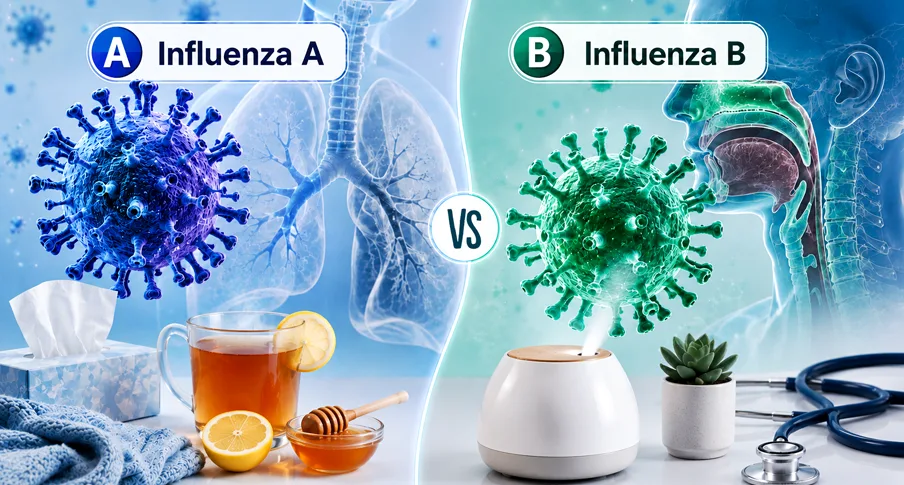
Influenza A and Influenza B: What Are They?
There are different types of influenza viruses, with the predominant cause of all human seasonal flus being Influenza A & Influenza B.
The infection is transmitted from one person to another by droplet particles excreted in the air by coughing and sneezing, blowing on the mouth and nose, and then by inhalation of these particles. It can also be transmitted by contact with contaminated surfaces.
Influenza A and B are distinct due to the range of disease each causes, leading to annual epidemics.
Influenza A
Influenza A infects not only humans but also many other species (such as whales, ducks, and pigs). This capacity to be transmitted from one host to another is responsible for its rapid evolution, the emergence of new strains, and the need for the preparation of new vaccines. This ability to evolve more rapidly is also the reason for influenza A being more likely to be the cause of seasonal epidemics.
Influenza B
Influenza B infects humans more than Influenza A and has a slower rate of evolution. It predominates in the UK, causing more localised seasonal epidemics, but it causes significant mortality and morbidity. Both, however, are responsible for the seasonal epidemic.
Influenza A Symptoms
Onset of symptoms of influenza A occurs within a short period of time, for 80% of patients, between 1 and 4 days after infection with the influenza A virus.
Common symptoms include:
- Fever/Chilly feeling
- Dry cough.
- Sore throat
- A runny nose or a blocked nose
- Muscular and joint pains
- Headache
- Dehydration/profound exhaustion
Occasionally, nausea, vomiting, and diarrhea may also occur. In children, they may be more common. The symptoms in most people tend to improve after a week, although tiredness and cough may continue.
Influenza B Symptoms
Symptoms of Influenza B are, in fact, no different from those of influenza A, and mostly, there is no way of differentiating symptoms of either disease at all without laboratory testing.
With Influenza B, patients generally report fever, cough, sore throat, muscle pain, and headache. The presentation can be highly variable, as the disease can be severe enough that the patient will require professional medical help.
What Is the Main Difference Between Flu A and Flu B?
Influenza A can develop at a much faster rate than most other viruses. The closeness between the two species means that, with constant genetic mutations happening at a rate that will always produce a new strain of the virus regularly, it is this attribute that makes it responsible for most of the seasonal influenza epidemics.
Influenza B is mostly a human disease and, because it is less variable, will be less likely to spread epidemics of the same extent as influenza A. It can cause considerable morbidity and is perhaps more likely to cause wider epidemics in the more vulnerable individuals.
About the illness itself, it can sometimes be quite hard for the patient to identify exactly what virus they have acquired. At times, clinical judgement will be the deciding factor that determines whether to proceed with a test.
Transmission of Influenza Viruses?
Influenza A & Influenza B are both notoriously infectious diseases that are highly transmissible from person to person, particularly during the peak season of the annual influenza outbreak.
The primary method of transmission for a virus is by coughing or sneezing, where the infected individual emits a cloud of virus through the mucus droplets expelled during their cough, sneeze, or speaking. You can also pick up the infection if your hands touch a virus-infected object or substance and then touch your face before washing your hands.
Individuals may be infectious before they are aware that they are unwell and remain infectious for several days before the symptoms develop.
Influenza A management
However, today there are no therapy options to beat the Influenza A infection, but the aim of management is temporary symptomatic relief until the immune system manages to clear the infection.
The usual consensus is that most people will recover by resting as much as possible, keeping well hydrated, and taking recommended doses of over-the-counter medicines, such as a temperature reducer or painkiller. Eating healthily may also help.
In those at higher risk of complications or when the illness has been diagnosed early, the doctor may consider the prescription of antiviral drugs. These work best when taken early (i.e., soon after symptoms first appear).
Influenza B management
The management is almost the same as for Influenza A.
Sometimes, a healthcare professional will recommend that you use antivirals, especially if you are more likely to develop a serious illness or related complications, and based on your symptoms and health history.
Can Influenza Cause Complications?
Most people will recover without any long-term effects (although there may be short-term effects), but some people (particularly those more susceptible) may have complications.
The complications may be pneumonia or sinus infection, middle ear infection, dehydration, worsening of asthma, or cardiac problems.
People who may have a higher risk of complications include:
- People aged over 65 years.
- Pregnant Individual
- Chronic diagnoses
- Those with diminished immune defences
If symptoms worsen after improving or fail to improve after initial treatment, then refer to a medical assessment.
Can You Lower the Risk of Getting the Flu?
There is no absolute approach to avoid all infections, but there are practical steps that may be able to restrict the transmission of seasonal influenza.
Good hand, cough, and sneeze hygiene; avoiding work or school if unwell, where practical; and frequent cleaning of commonly used surfaces should help to limit the spread of common cold or influenza infection.
These measures will work well for both Influenza A and Influenza B.
Conclusion
There are primarily two types of flu that affect humans as seasonal influenza. They are Influenza A and Influenza B. Although these two viruses may adapt and transmit differently, they tend to produce most of the same symptoms
The majority of people will get better while resting, hydrating, and supporting the body, but some may benefit from antiviral medication if it has been recommended by a doctor. Early recognition of symptoms, together with caring and hygiene precautions, can help control the spread of the flu this season.
Frequently Asked Questions
How serious are influenza A and B?
Both Influenza A and B could be mild or more serious, but more serious infections may be more likely to cause complications in other age groups, such as the very young and the very old, as well as pregnant women and people who have chronic illness.
What should I do if I have influenza A and B?
Rest, keep well hydrated, and control symptoms with the use of medicines as recommended. If symptoms are severe or worsen, or if you are in a higher-risk group for complications, see a doctor.
How long do flu A and flu B last?
Most people recover in 5-7 days; fatigue and cough (if present) may last up to 2 weeks.
Are flu A and B both contagious?
Yes, influenza A and B are highly transmissible from person to person by means of infected respiratory secretions and from aerosolised coughed or sneezed droplets.