

 GP Services
 Allied Health Services
  Mental Health Services
  GP Consultation
  eScript & Prescription
  Online Medical Certificates
  Specialist Referral Request
  Pathology Referral Request
  Radiology Referral Request


 Physiotherapy
  Dietetics
  Telepsychiatry & Online ADHD Psychiatrists
  Online Psychologists
  What We Offer
  Telehealth Services
  Health Conditions


 Certificate Validity
  Corporate Health Services
  Online Doctor Consultation Melbourne
  Online Doctor Consultation in Adelaide
  Online GP Consultation Sydney
  Telehealth Consultation in Perth
  Telehealth GP Appointment for Brisbane Residents
 Ketosis is the process of using fat for energy rather than primarily glucose. This can be caused by a ketogenic diet in which the consumption of carbohydrates is greatly decreased and the consumption of fats is increased.
The popularity of ketosis is partially due to the recent trends in low-carb diets, calorie control, and therapeutic diets. However, it is important to note that while the use of ketosis is supported for some individuals, it is not suitable for the general population. The understanding of this process can help support individuals in the process of informed and strategic dietary decisions.
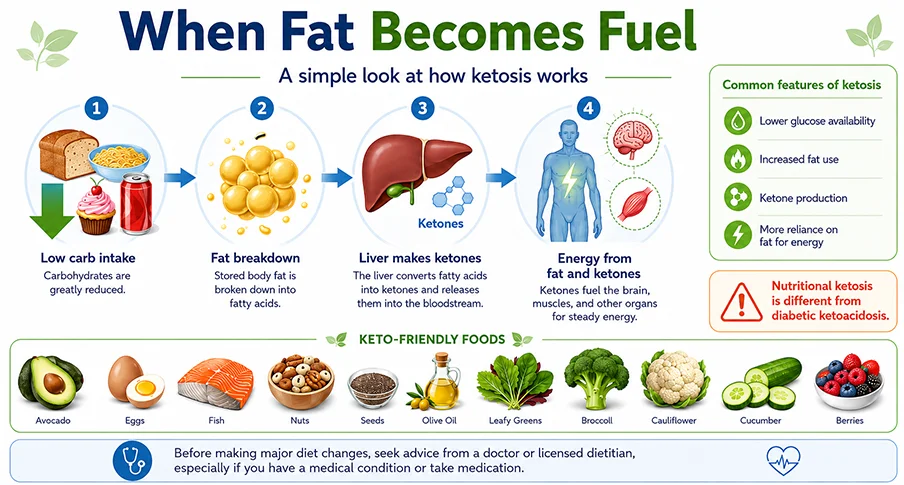
Before making profound and rapid changes to your diet, particularly if you have a pre-existing medical condition or are currently prescribed medication, it is highly recommended that you seek a licensed dietician or doctor’s advice.
What Is Ketosis?
Carbohydrates are broken down into glucose and used for energy by many cells. When consumption of carbohydrates is greatly reduced, there still remains a decrease in the availability of glucose. However, fat stores can be used for energy if needed. The liver begins to produce ketones as an alternate source of energy to glucose that can be used, in certain conditions, by the brain. This process of metabolism is termed ketosis.
Ketosis can be reached by fasting for a long time or severely restricting carbs. Ketogenic diets aim at reaching this state of metabolism by taking a very high-fat and very low-carb diet.
Ketosis has signs and symptoms like:
- A drop in the amount of glucose taken in due to a drop in carbs
- An increase in the breakdown of fats for energy use
- Ketone production by the liver
- More reliance on fat and ketones for energy use
It’s important to note that nutritional ketosis is not as dangerous as diabetic ketoacidosis, which demands medical attention.
What Is a Ketogenic Diet?
A ketogenic diet mainly comes into effect by cutting carbohydrates and taking energy from fats instead. The amount of protein goes through some changes based on how the diet is needed.
Some examples of food types that may be consumed include:
- types of meat, fish, and other protein sources,
- raw vegetables such as lettuce, tomatoes, onions, broccoli, and green beans
- nuts and seeds
- avocado
- olive oil
- other dietary fats
Things that need to be eaten a lot less include:
- Candy, desserts, and sweets
- Sodas and other carbonated drinks
- Pizza, other pastas, and breads
- Cakes, pastries, other baked goods
- Starchy vegetables
Keeping a very strict diet can be hard; you must account for your vitamin and mineral needs, medications, and pre-existing health conditions.
Keto-Friendly Vegetables and Low-Carb Fruits
Vegetables make up a major part of preparing a ketogenic diet. These vegetables are low in carbohydrates and high in fiber. Here are some examples:
- Lettuce
- Broccoli
- Cauliflower
- Zucchini
- Cucumber
- Capsicums
- Mushrooms
- Asparagus
Not only are these examples the main sources of various nutrients, but preparation and portion control all affect the total carbohydrate count of a meal.
Looking at carbohydrate counts in fruits, low-carb fruits tend to work better in a low-carbohydrate diet. Low-carbohydrate diets do tend to incorporate berries, while low-carb diets do tend to incorporate avocados, which are also relatively low in carbs.
However, there are other fruits that have a greater carbohydrate-to-free-sugar ratio and therefore need to be strictly limited on a ketogenic diet.
Just because these fruits need to be limited does not mean they are not healthy; it is just an example of the ketogenic diet in practice and adjusting to your diet.
High Fat, Low-Carb Foods To Consider
While it is true that a ketogenic diet is based on high-fat, low-carb foods, food quality still counts.
Instead of relying on heavily processed foods, a food selection that is more varied could incorporate healthy fats and high-quality protein, coupled with nutrient-rich vegetables.
Some of the most common foods used in a ketogenic diet are
- Avocado
- Nuts and seeds
- Oily fish
- Eggs
- Olives
- Some dairy
Since cakes and biscuits offer energy and other nutrients, portion sizes still matter.
You may wish to seek further advice from a qualified health professional if making significant changes to the diet to achieve body-weight goals. A tailored weight management consultation can allow individuals to tailor weight management strategies to suit their personal circumstances, eating habits, and broader health aims and objectives rather than adhering to a single diet regime.
What Drinks Sit in Your Keto Diet?
While you can get away with not drinking fluids for a few hours, hydration is still needed. Water is acceptable most of the time.
For drinks that adhere to the keto diet, one can also consider:
- Flat water, including still and sparkling water.
- Unsweetened tea.
- Black or no-added-sugar coffee.
- Any non-sweetened drinks that are diet-friendly.
The carbohydrate content of sweetened drinks can be surprising.
To compare the content of different drinks, it is advised to read the labels and not presume drinks with “low carb” or “keto” are suitable for everyone.
Ketosis and Weight Loss
The ketogenic diet has many clinical applications. However, many have discovered many benefits of the diet when used for weight loss. Although body weight is a complex interaction of different factors, the following should be considered:
- Energy in and energy out.
- Food choice.
- Eating patterns.
- Levels of physical activity.
- Maintenance of wakefulness and engagement in usual daily activities.
- Personal health factors.
An online diet plan may not necessarily suit a person as opposed to seeking professional support. Some dietitians offer services that include assessing a person’s nutritional needs and how best to fulfill those needs through conscious food choices.
Dietitians can also help shape opinions on whether or not a very restrictive diet would be appropriate for a patient and how best to apply a nutritionally adequate diet.
The Keto Diet for Epilepsy
The purpose of using the keto diet for epilepsy is completely different from using the ketogenic diet for casual weight loss.
At times, some epilepsy patients have been placed under supervision, and some patients have been fed under some special clinical circumstances. Because of the nature of these diets, they can influence how individuals take their food and may not be appropriate diets for everyone.
Ketogenic diets should be used under the professional direction and supervision of a qualified healthcare professional even if they are substituted for or used alongside epilepsy medication.
Tips for Approaching Ketosis Safely
For any significant change in diet to be considered, it is wise to note that losing excess carbohydrates is not as important as being conscious of food nutrients that remain.
- Use a wide variety of foods when possible.
- Different foods and drinks have different carbohydrate concentrations. Read food and drink labels to compare.
- Think about the long-term, sustainable lifestyle change, rather than rushing into an extremely restrictive diet.
If you have existing medical conditions or regularly take medication, you should consult a doctor before following a special diet.
Conclusion
The state of ketosis is an abnormal metabolic process where the body uses ketones as alternative energy in situations when there is a lack of carbohydrates. This is primarily associated with ketogenic foods, or foods that contain high levels of fat and low levels of carbohydrates.
Understanding whether foods or drinks are “keto-friendly” can help you make more informed choices. However, it should be noted that ketosis and ketogenic diets are not safe or effective for everyone.
A restrictive diet should be fully put into perspective about nutrition as a whole, lifestyle, and a person’s health situation. Advice on selecting a diet for weight loss or other nutritional needs can provide tailored support for effective, practical choices.
Frequently Asked Questions
How Long Does It Take to Reach Ketosis?
The time to reach ketosis varies and is dependent upon the amount of carbohydrates consumed, time and type of exercise, as well as the individual’s metabolism. There is no way to predict it.
Is the Ketogenic Diet Safe for Everyone?
No. A ketogenic diet may not be appropriate for everyone, especially if you have specific nutritional needs, particular health concerns, or are under a physician’s care. It is better to seek professional guidance before making any significant dietary adjustments.
Can I Eat Fruit on the Keto Diet?
Certain lower-carb fruits may not be compatible with a keto diet depending on serving size and your carb allowance for the day. Always look at the bigger picture and consider your diet as a whole when making this determination.
What Is the Difference Between Ketosis and Ketoacidosis?
They are not the same. Nutritional ketosis is a far cry from diabetic ketoacidosis. Ketoacidosis is a serious and dangerous medical problem that requires immediate medical attention.