Introduction
Roles in the public safety and essential services sectors likely have the most tremendous impact on society as a whole. If you consider workers in areas such as healthcare, emergency services, aged care, or food handling, their health can significantly affect the safety of the wider community. A respiratory infection that may be only a mild irritant for someone working at a computer can be hazardous for frail seniors when brought into a nursing home.
To minimise the spread of airborne particles, workplaces in these sectors are subject to very close scrutiny under Work Health and Safety (WHS) laws. Therefore, there is not only greater tolerance for employees staying home when unwell, but also evidence that their absence must be compelling. Continuing to work while unwell in these roles may conflict with workplace health and safety policies.
Essential workers can find it difficult to obtain documentation quickly enough to meet the demands of their work; without the documentation, professionals cannot take or justify time off. Prime Medic offers a hassle-free way to obtain workplace medical documentation for a respiratory illness or public safety role. AHPRA-registered doctors may assess your situation via telehealth and consider appropriate documentation, so you can meet your employer's requirements without exposing other patients in the medical office to illness.
If documentation is required for a safety-critical role, you may request an assessment online.
Jobs That Require Additional Precautionary Actions
When it comes to infection control, jobs can vary greatly. Some industries are classified as "high risk," and in these cases, even the slightest respiratory symptom triggers immediate exclusion under company policy.
The chain of protection
In these settings, it serves as both a medical certificate and a health and safety measure.
- Healthcare and Aged Care: Nurses, carers, and support staff work with highly vulnerable people and may play a significant role in infection transmission if unwell. Introducing a respiratory pathogen here can have severe consequences. To be cleared to return to work, an employee may be asked to present medical documentation indicating suitability to return to work.
- Childcare and Education: For example, it is well known that children readily disclose to adults, but it is also true that their immune systems are not yet fully developed. State health departments strictly enforce exclusion periods.
- Food Handling and Service: It is through the food prepared by the chef and served by waitpersons that the public gets exposed. Food safety standards will include respiratory hygiene as a critical issue.
- Emergency Services: Due to the nature of their work, police officers, firefighters, and paramedics often work in confined spaces, such as vehicles and stations, and, in the course of their duties, they must interact with the public in uncontrolled environments.
Being aware of the existence of such tightly regulated, high-risk work environments helps employees understand that it is reasonable for their manager to request evidence supporting the illness claim. It is not about mistrusting the employee but about protecting the safety of the most vulnerable people.
Legal Framework for Public Safety Documentation
These days, there is a lengthy and complex debate about the need to request medical evidence from those in public safety roles, but behind it, one can see the Australian laws, mainly the Fair Work Act 2009 and the Work Health and Safety Act 2011.
The concept of duty of care and evidence
- Employer Obligations: The employer's primary duty of care is to keep workers and other people, such as patients and customers, safe and healthy. In light of this, an employer may restrict attendance at work where there is a reasonable health and safety concern. when it is reasonably suspected that the employee is a health hazard.
- Employee Rights: Employees have a right to take personal leave when they are unfit for work. But in work roles that are safety critical, the criterion of "evidence that would satisfy a reasonable person" is very often interpreted quite strictly. A medical certificate is commonly used as evidence for health and safety compliance.
- Fit for Duty: The difference between a normal sick note, which informs you are ill, and a "Fit for Duty" note is that the latter indicates that you are assessed as suitable to resume duties at that time. Therefore, you can perform inherent job requirements without posing health or safety risks.
You need to understand the safety documentation process and the fair work rules to remain employable and ethically sound.
The Work of Telehealth GPs in Giving Clearance
Telehealth may be used to support administrative aspects of respiratory illness documentation. because it eliminates the risk of disease transmission during in-person visits.
The Doctor's Assessment
The doctor evaluates fitness for work using a risk-based assessment during the consultation.
- Illness History: To assess the likely infectious risk based on symptom history and available guidance (or when the infectious period probably ended), the doctor starts by, amongst other things, tracing the timeline of the infection (public health guidelines at the time being used as reference).
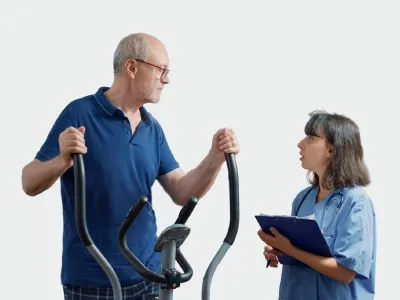
- Work Capacity: The employee must be confirmed to be non-infectious and fully physically capable (functional). For instance, a firefighter with a respiratory virus may need to demonstrate adequate functional capacity for their role, not merely declare "without fever."
- Setting/Role Assessment: The medical professional is placing greater emphasis on the patient's role. If the patient is a clerk working with a light and has a residual cough, that cough may limit suitability for certain duties.
Resuming fitness-to-duty paperwork ensures that the certificate you receive aligns with the actual job requirements. Book an appointment with a GP online to get your specific clearance.
Certificates to Return to Public Safety Work
Returning to work in an environment where public safety is paramount may require obtaining specific certificates, such as a "clearance certificate" or a "fit to return" note.
Moving beyond absence documentation
Generally, medical certificates cover the days that one was absent. On the other hand, a respiratory fit-to-return note looks ahead.
- Doctor's Confirmation of Recovery: It is included in the letter of clearance, which states that the doctor has assessed the patient as fit to resume duties at that time.
- Work Adjustment: An individual, such as a paramedic whose job requires significant physical exertion, may have a doctor assign a period of "light duties" if their respiratory stamina remains low, even if the infection is considered resolved.
- Security Blanket: The employer not only receives the necessary proof of the doctor's approval but also supports workplace risk management processes, allowing them to reinstate the employee to the schedule.
Being assessed as fit to return to work is typically the final step in the healing process for essential workers. Read how our return to work clearance process works.
Protecting Privacy in High Security Roles
Working in public safety roles is already highly demanding additionally, employees with security law enforcement are typically more concerned about privacy and data security.
Confidentiality Protocols
- Private Records: Your consultation notes are accessible only when stored on encrypted, Australian-based servers that are managed in accordance with applicable privacy laws and OAIC guidance.
- Minimum Disclosure: The medical certificate that will be presented to your employer will be focused on your ability to work (e.g. "Fit for duties") rather than clinical details. You don't need to share your medical records with HR just to obtain a clearance note.
- Verification Independent of Medical Records: Employers may be able to verify certificate authenticity using available verification processes without direct access to clinical notes.
By implementing the strictest health privacy documentation standards, we thereby protect our caregivers. You can review our security measures to ensure a good night's sleep, knowing everything is secure.
More information on high-risk workplace safety is available from Safe Work Australia and the Department of Health and Aged Care.
Need Medical Advice?
Consult with our experienced doctors from the comfort of your home. Available 24/7 for your convenience.



 GP Services
 Allied Health Services
  Mental Health Services
  GP Consultation
 eScript & Prescription
 Online Medical Certificates
 Specialist Referral Request
 Pathology Referral Request
 Radiology Referral Request


 Physiotherapy
 Dietetics
 Telepsychiatry & Online ADHD Psychiatrists
 Online Psychologists
 What We Offer
  Telehealth Services
 Health Conditions


 Certificate Validity
  Corporate Health Services
  Online Doctor Consultation Melbourne
  Online Doctor Consultation in Adelaide
  Online GP Consultation Sydney
  Telehealth Consultation in Perth
  Telehealth GP Appointment for Brisbane Residents